

Beyond the Bulb: Fresh Lighting Concepts for Every Room
August 13, 2025
Rustic Charm Meets Modern Style: Best Wood Dining Chandeliers
August 15, 2025
Why Upgrading Your Old Track Lighting Makes All the Difference
Replace old track lighting to transform your space from dated to dazzling in just a few hours. Here’s what you need to know:
Quick Steps to Replace Old Track Lighting:
- Turn off power at the circuit breaker and test with a voltage tester
- Remove old fixtures by unscrewing track heads and disconnecting wires
- Patch and paint any ceiling damage from the old mounting holes
- Install new mounting plate and connect wires (black to black, white to white, ground to green screw)
- Attach new track and snap in your modern LED light heads
- Test the system and adjust light direction as needed
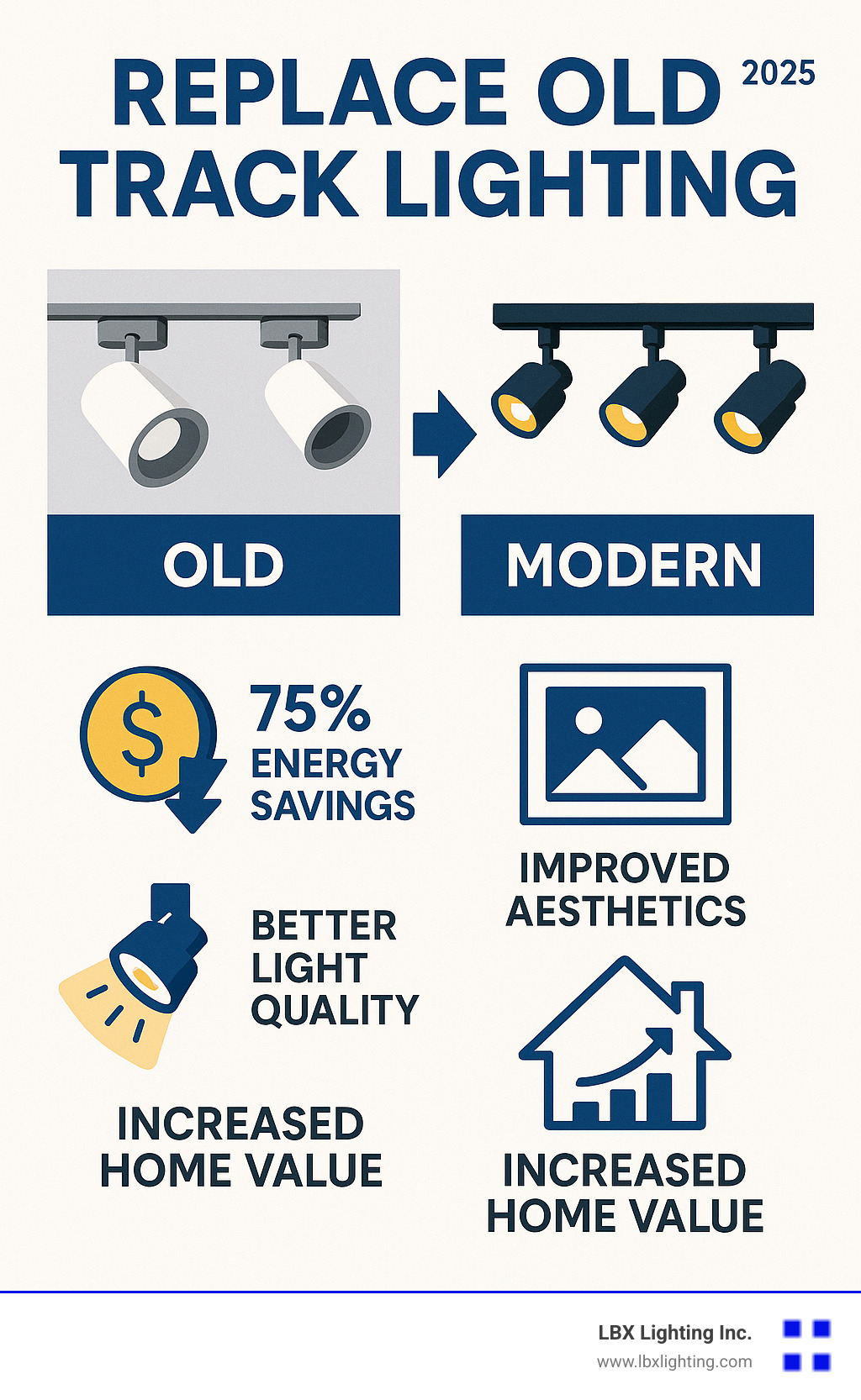
That old track lighting from the 1980s isn’t just an eyesore—it’s costing you money. As one homeowner found, “Our track lighting was classic 1980s. Big and white and dated.” Beyond aesthetics, old track systems often use outdated bulb technology that consumes 75% more energy than modern LED alternatives.
The biggest benefits of upgrading include:
- Modern aesthetics that complement today’s interior design trends
- Energy savings up to 75% with LED technology
- Better light quality with adjustable, directional illumination
- Increased home value through updated fixtures
The process is surprisingly straightforward for most homeowners. The main challenge is compatibility. Track lighting systems come in three types (H, J, and L), and they are not interchangeable. New track lights often use different wiring than older systems; newer fixtures are typically “three wire” while older tracks might be “two wire.”
I’m Michael Eftekhar, and over the past 30 years at LBX Lighting, I’ve helped thousands of homeowners successfully replace old track lighting with modern, energy-efficient solutions. My experience shows that with the right guidance and quality fixtures, this upgrade can dramatically transform any space while staying within budget.
Replace old track lighting terms to learn:
Planning Your Track Lighting Replacement
Good preparation is key to any successful lighting project. When you’re ready to replace old track lighting, planning ahead saves hours of frustration and ensures a professional-looking result.
This phase is about gathering the right tools, understanding your track system, and choosing fixtures that match your space and needs. A little planning now prevents headaches later.
Good lighting does more than just illuminate your space; it affects how you feel in your home. The right lighting can boost your mood, reduce eye strain, and make everyday tasks easier. Learn more about Why Good Lighting Is Important in Your Home and for Your Mood.
Essential Tools and Materials

Having the right tools makes this project much easier and safer. You don’t want to be halfway through removing your old fixture only to realize you’re missing a crucial tool.
For the electrical work, you’ll need a voltage tester (your most important safety tool), a screwdriver set, wire strippers, and pliers. Don’t forget wire nuts and electrical tape to secure your connections.
Since removing old track lighting often reveals ceiling damage, gather your repair supplies: a drywall patch kit, putty knife, sandpaper, and matching paint and primer. A sturdy ladder is essential for reaching your ceiling safely.
The star of the show is your new track lighting system or the alternative you’ve chosen.
Understanding Track Systems: H, J, and L Compatibility
This is where many DIYers hit a roadblock. Track lighting systems aren’t one-size-fits-all. They come in three main, incompatible types: H-Type, J-Type, and L-Type.
The H-Type system (or “Halo” type) has three contact points. J-Type systems (or “Juno” type) usually have two contact points in a narrower design. L-Type systems (or “Lightolier” type) also have two contact points but with a distinctive shape.
To identify your system, examine where the track connects to the electrical box or the base of your existing track heads. Count the contact points, note their arrangement, and check for brand markings.
Measuring your track channels can also provide clues. The width and depth vary between types.
Why does this matter? Forcing an incompatible head into a track won’t work and can damage your new fixtures. When you replace old track lighting, ensuring compatibility prevents headaches and safety issues. For detailed information on a common system, check out our H-Style Track Lighting guide.
Choosing Your New Lighting
Now for the fun part: selecting fixtures that will transform your space! This is where your personal style shines.
Style and finish should complement your room’s décor. Whether you prefer modern, industrial, or traditional looks, the finish—crisp white, bold black, or brushed nickel—can dramatically impact your room’s feel.
Functionality is equally important. Think about how you use the space. Task lighting is perfect for kitchens, while ambient lighting provides gentle overall illumination for living areas. Accent lighting highlights artwork or architectural features.
Room size and ceiling height are crucial. Larger spaces may need more fixtures or higher lumen output. Low ceilings work best with flush-mounted options, while high ceilings can handle more dramatic suspended fixtures.
Consider if you want your lighting to blend in or make a bold statement. Both approaches can be stunning. For guidance on creating the perfect lighting scheme, explore How to Develop a Lighting Plan.
The Step-by-Step Guide to Replace Old Track Lighting
After planning, it’s time to transform your space. We’ll walk through each step carefully. The key to successfully replacing old track lighting is taking your time and prioritizing safety above all else.
Step 1: Safety First & Removing the Old Fixture
Electrical safety isn’t optional; it’s the most critical part of this project. All DIY electrical disasters are preventable with proper precautions.
First, go to your electrical panel and turn off the circuit breaker for the track lighting. If you’re unsure which one it is, turn off the main breaker for the house. This small inconvenience is better than getting shocked.
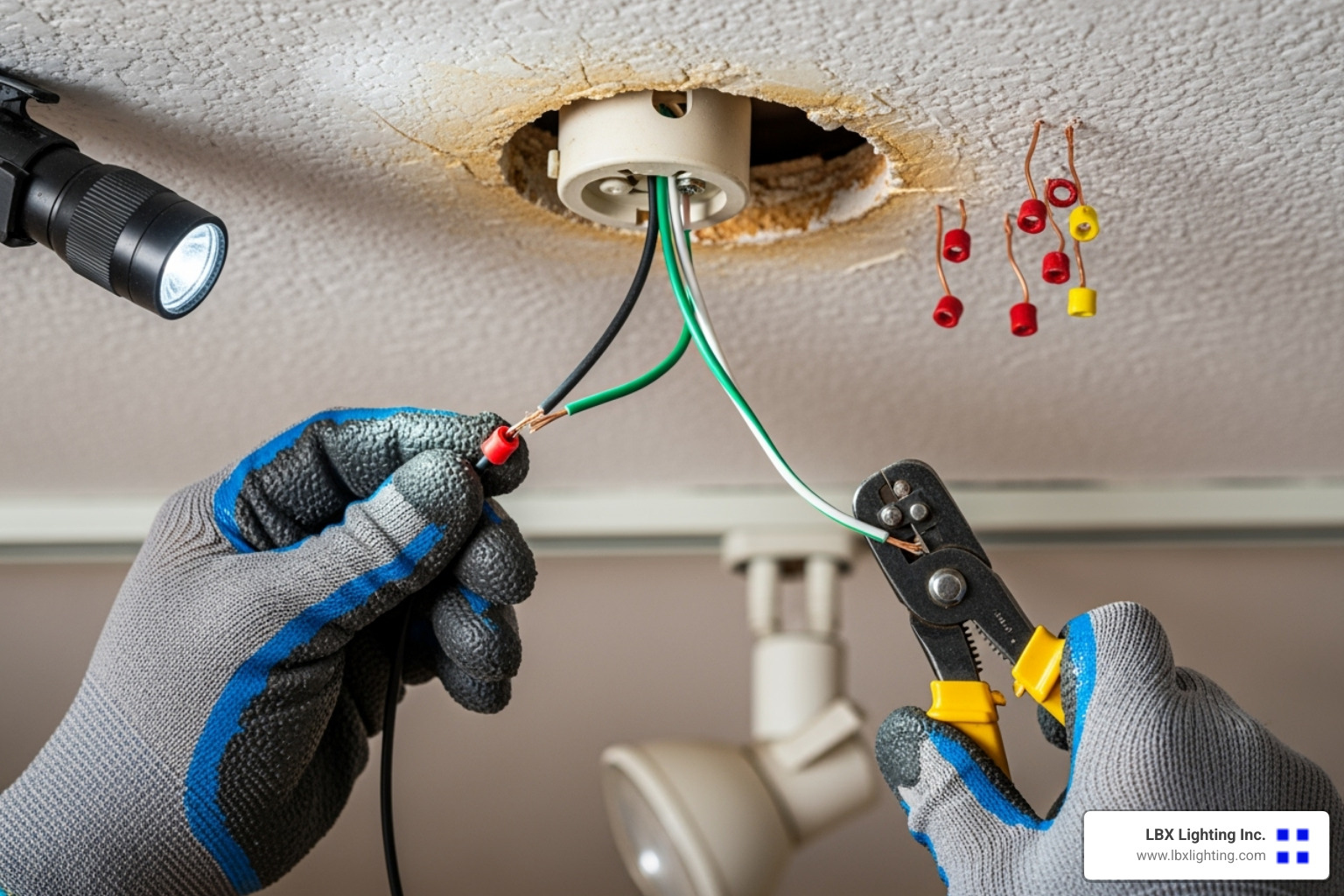
Next, verify the power is truly off with your voltage tester. Even pros do this every time. Touch the probes to the black and white wires at the fixture; there should be no reading. If there is, recheck your breaker box.
Once you’ve confirmed the power is off, remove the track heads. Most twist off or have a small release mechanism. Then, unscrew the track from the ceiling, including the mounting plate at the electrical box.
Finally, disconnect the wires at the electrical box by untwisting the wire nuts. Pro tip: snap a quick photo with your phone before disconnecting anything for reference.
Step 2: Preparing the Ceiling for New Lights
Removing old track lighting often reveals unpainted areas, screw holes, or minor damage. This is normal and easily fixable.
First, inspect the electrical box. Ensure it’s solid and properly secured to the ceiling structure. A wobbly box is a safety hazard and won’t support your new fixture. If you have concerns, call a professional.
For patching screw holes and minor damage, use a drywall patch kit or spackle. Fill every hole completely with a putty knife, making the spackle flush with the ceiling. For detailed guidance, check this resource on how to patch holes with spackle.
Once dry, sand the patched areas smooth so they blend seamlessly. Then, apply primer and paint. Prime the patched areas first, then paint the entire affected area for a crisp, finished look.
Step 3: How to install and wire your new fixture to replace old track lighting
Now it’s time to install your new lighting. You’ve got this.
Start by installing the new mounting plate that came with your fixture. Secure it firmly to the electrical box, ensuring it’s level.
Next, make the wiring connections, using your photo for reference. Connect black wire to black wire (hot), white wire to white wire (neutral), and the ground wire (bare copper or green) to the green grounding screw on the mounting plate. The ground wire is your safety net against electrical shock.
Twist each pair of wires together firmly, then secure them with wire nuts. Give each connection a gentle tug to ensure it’s solid. Wrapping the wire nuts with electrical tape adds extra security.
Finally, attach your new fixture to the mounting plate, following the manufacturer’s instructions.
Once everything is secure, go back to the breaker box and flip the power on. Your new lighting should illuminate beautifully, instantly showing what a difference it makes.
For more lighting options, explore our complete collection of Residential Lighting Fixtures. You’ve just completed a project that will improve your daily life for years to come.
Modern Alternatives to Old Track Lighting
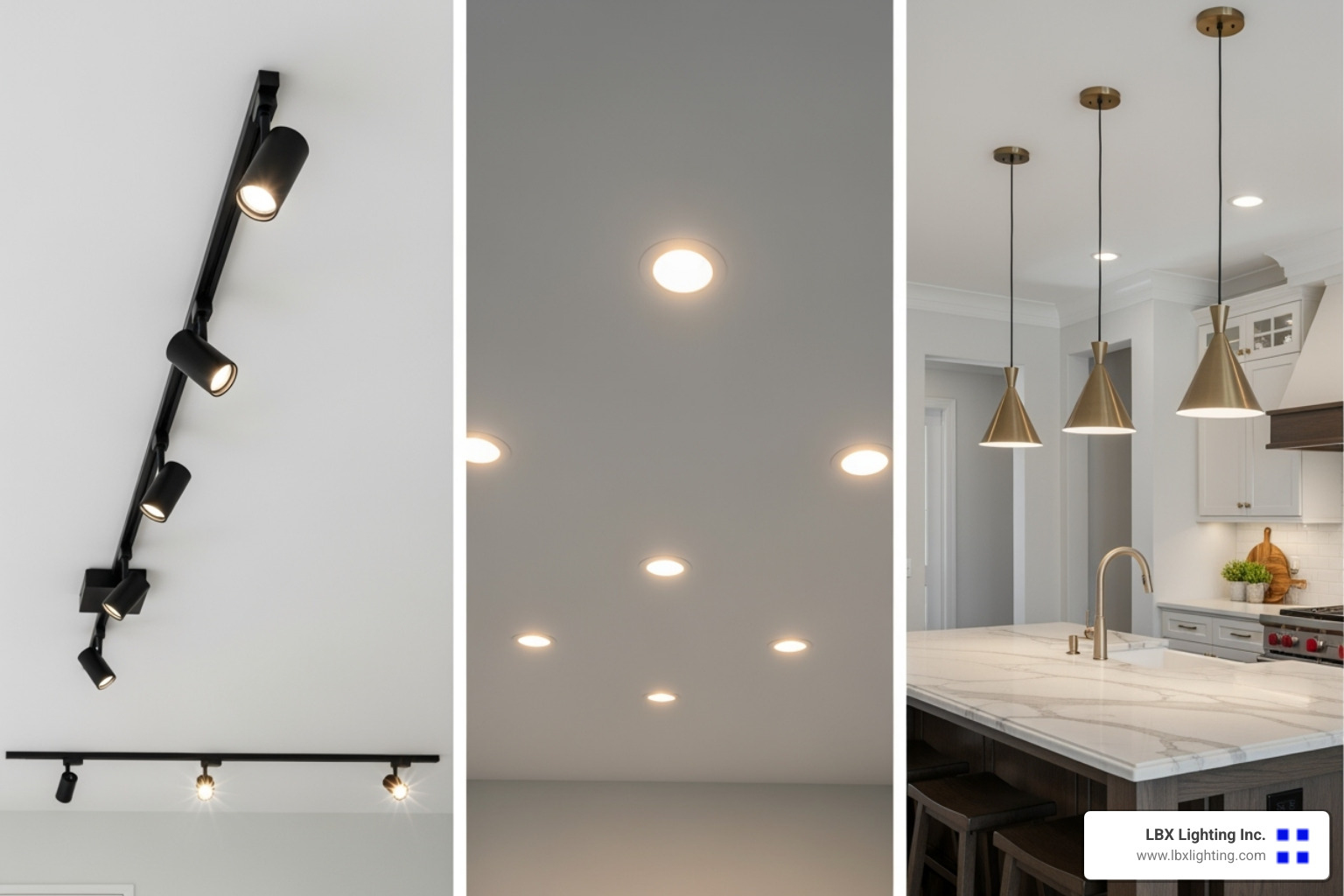
Sometimes, the best way to replace old track lighting is to explore different styles that better suit your vision. Today’s lighting market offers incredible variety, from sleek recessed options to statement-making pendants.
Each alternative brings its own personality to your space. Whether you prefer the minimalism of recessed lighting or the flair of pendant fixtures, these modern solutions deliver style and energy savings, changing how your room feels and functions. For more ways to save on your lighting bills, check out these Simple Money-Saving Lighting Tips for Homeowners.
Option 1: Upgrading to Modern LED Track Lighting
If you love track lighting’s flexibility but not its outdated look, upgrading to modern LED track lighting is a perfect match. Today’s systems are nothing like the chunky fixtures of the past.
Sleek designs define modern track lighting, with slim profiles and contemporary finishes that blend into your ceiling or add architectural interest.
The flexible systems offer the versatility track lighting is famous for. You can easily slide, twist, or reposition individual lights to highlight artwork, illuminate a workspace, or adjust for furniture changes.
Directional light makes these systems valuable in kitchens or home offices. You can spotlight specific areas while leaving others softly lit, creating interesting layers of light.
The biggest benefit is LED energy savings. These systems use at least 75% less energy than traditional incandescent bulbs and last 25 times longer, lowering electricity bills and reducing bulb changes.
The longevity of LEDs is remarkable, with many exceeding 50,000 hours of use. If used 5 hours daily, they can last over 25 years. Find more about Eco-Friendly Lighting Solutions.
Option 2: Switching to Recessed Lighting
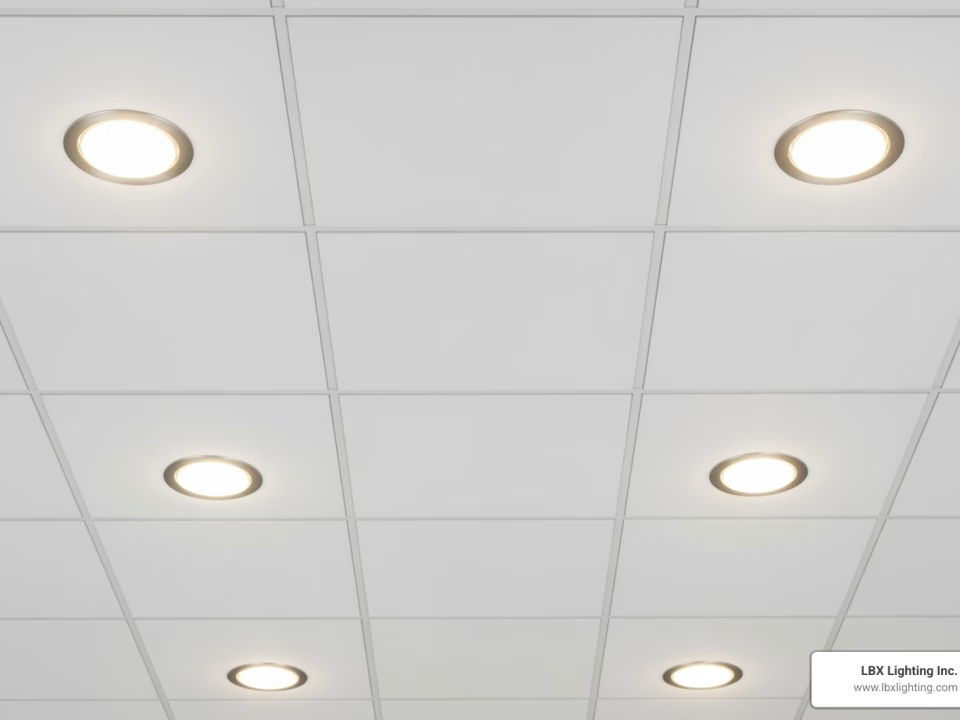
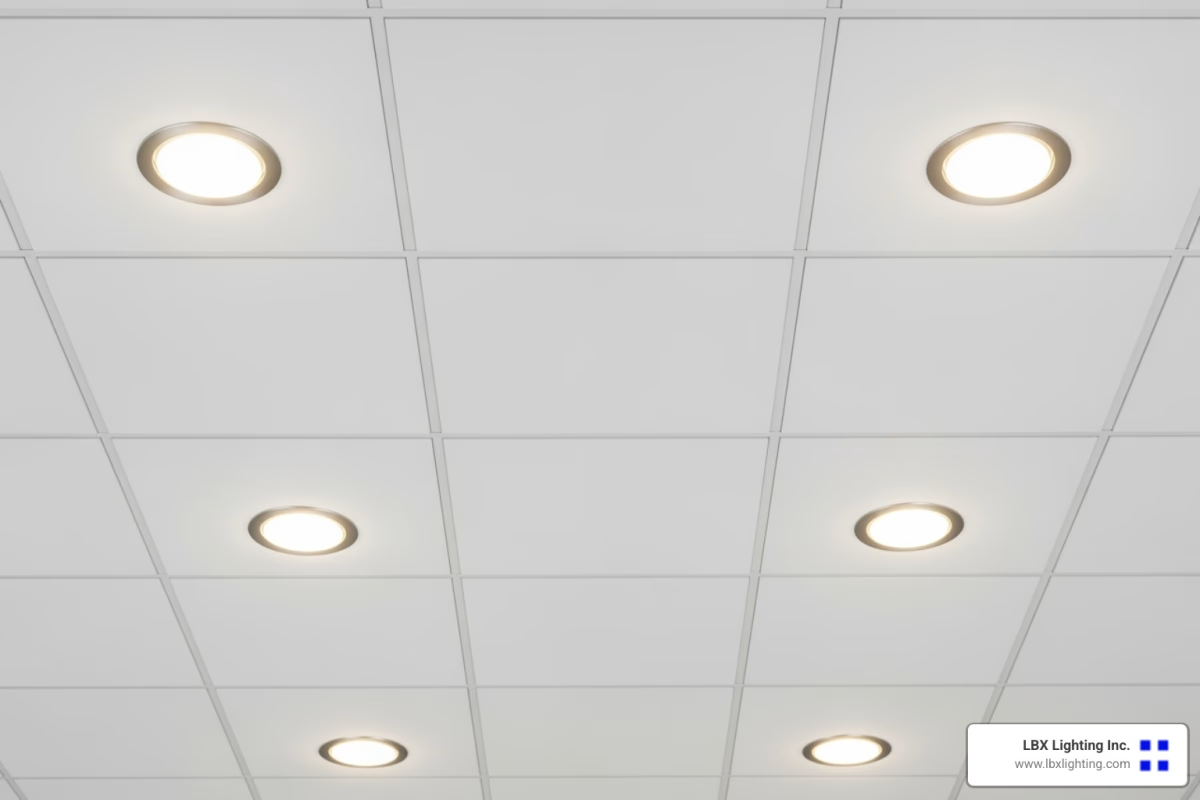
For homeowners craving clean, uncluttered ceilings, recessed lighting is a popular alternative. The market is growing at 6.8% annually, driven by its minimalist aesthetic.
Minimalist aesthetic is recessed lighting’s strongest selling point. Fixtures install flush with your ceiling for a seamless look that makes rooms feel larger and more open.
Even light distribution eliminates dark spots and harsh shadows, providing uniform ambient lighting that makes a room feel welcoming.
Modern building codes often require IC-rated fixtures for safety, which are safe to touch insulation and prevent air leakage, improving energy efficiency.
Converting from track to recessed lighting is more complex, as it involves cutting new holes and running wiring. However, the sophisticated result often justifies the effort. Our guide on How to Install Recessed Canned Lighting in 5 Easy Steps walks you through the process.
Option 3: Installing Pendant Lighting
For a bold design statement, pendant lighting delivers drama and function. The market is projected to reach $27 billion by 2028, as homeowners seek fixtures that are conversation pieces.
Creating a focal point is pendant lighting’s superpower. A single dramatic pendant or a cluster of smaller ones instantly draws the eye and defines a space.
Their decorative statement potential is unlimited, with endless styles, materials, and sizes. Pendants are ideal for kitchen islands, providing task lighting for food prep while adding style. Hang them 30-36 inches above the work surface. They are also perfect for dining rooms, creating an intimate atmosphere over a table.
Pendant lighting transforms illumination into a design element, adding character to your room. Explore our collection of Stylish Pendant Lights to find your perfect match.
Comparing New Track vs. Recessed vs. Pendant Lighting
Choosing the right option to replace old track lighting depends on your specific needs and style preferences. Here’s how these three popular alternatives compare:
| Feature | New Track Lighting | Recessed Lighting | Pendant Lighting |
|---|---|---|---|
| Aesthetics | Modern, sleek, directional; less obtrusive than old track | Minimalist, clean ceiling; disappears into architecture | Decorative, statement piece; visual focal point |
| Installation Difficulty | Moderate (if replacing entire track); Easier (if just heads) | Moderate to High (requires cutting holes, precise spacing) | Moderate (requires secure electrical box) |
| Best For | Flexible task/accent lighting, highlighting features | General ambient lighting, low ceilings, modern design | Task lighting over surfaces, decorative accent, defining zones |
| Average Cost | Moderate (for quality LED systems) | Moderate to High (due to multiple fixtures and installation) | Varies greatly (from affordable to high-end statement pieces) |
Frequently Asked Questions about Track Lighting Replacement
After helping thousands of homeowners, I’ve noticed the same questions arise when people want to replace old track lighting. Here are honest answers based on our customers’ experiences at LBX Lighting.
How do I know if my new track heads are compatible with my old track?
Compatibility is the biggest headache. The most reliable approach is to identify your system type first (H, J, or L), as they are not interchangeable. Look for manufacturer markings on your existing track or light heads. If you can’t find any, measuring the contact points can be technical.
I usually advise customers to replace the entire track and heads together. It’s more work but guarantees perfect compatibility and avoids the frustration of mismatched parts. Newer systems also have improved, safer wiring.
What are the biggest challenges when you replace old track lighting?
Being prepared for potential challenges makes all the difference. Common issues include:
- Hidden ceiling surprises: Removing the old track may reveal unpainted areas, screw holes, or minor damage. This is normal and fixable with spackle and paint.
- Electrical box problems: The existing box might be loose or not centered where you want it. If switching to a heavier fixture like a pendant (over 50 lbs), the box will need special support to meet electrical code.
- Old, brittle wiring: Wires in older homes can be stiff with insulation that cracks easily. Handle them gently.
None of these challenges are deal-breakers; they just require patience.
When should I hire a professional electrician?
While DIY is empowering, safety is paramount. Sometimes, calling a licensed electrician is the smartest move. Hire a pro if:
- You’re uncomfortable with electrical work. Trust your gut; electricity demands respect.
- You find old or damaged wiring. Frayed wires or scorched insulation are red flags. Stop and call a professional immediately.
- You need to move electrical boxes or add new circuits. This work requires an understanding of electrical codes and often a permit.
- Your project is complex. Installing recessed lights without easy attic access, for example, is much harder.
At LBX Lighting, our expert staff can help you assess if your project is a good DIY candidate or if you’d benefit from professional installation. We’re here to support you either way.
Modernize Your Space with Confidence
You’ve reached the finish line! By following these steps, you can confidently replace old track lighting and create the bright, welcoming space you’ve always wanted. In just one weekend, you can tackle a project that delivers modern aesthetics, up to 75% energy savings, improved light quality, and increased home value.
Completing a DIY project is deeply satisfying. You’re not just swapping fixtures; you’re taking control of your home’s atmosphere. You’ll feel proud every time you flip the switch and see your beautiful new lighting come to life.
Lighting is the jewelry of architecture. It can make a small room feel spacious or a dated kitchen feel modern. Whether you chose sleek LED track lighting, clean recessed lights, or stunning pendants, you’ve made an investment that will pay dividends in comfort and enjoyment for years to come.
At LBX Lighting Inc., we’ve helped Houston homeowners and businesses illuminate their spaces for decades. Our commitment is to exceptional customer service, expert guidance, and competitive pricing. When you succeed with your lighting project, we succeed too.
Professional support is always available. If you have questions about compatibility, need help choosing a fixture, or want advice on your next project, our expert team is here to help. We believe everyone deserves a beautifully lit home.
Ready to explore more? For a wide selection of modern lighting solutions, check out our Track Lighting collection. Let us help you illuminate your world, one room at a time!