

Drop-In Brilliance: Your Guide to Recessed Lighting in Drop Ceilings
September 28, 2025
Spotlight on Savings: Why Energy Efficient Bulbs Are a Bright Idea
September 30, 2025
Why Light Control Systems Are Changing Modern Spaces
Light control systems are intelligent networks that automatically manage lighting based on occupancy, time, and natural light levels – going far beyond simple on/off switches to create responsive environments that save energy and improve comfort.
Key Benefits of Light Control Systems:
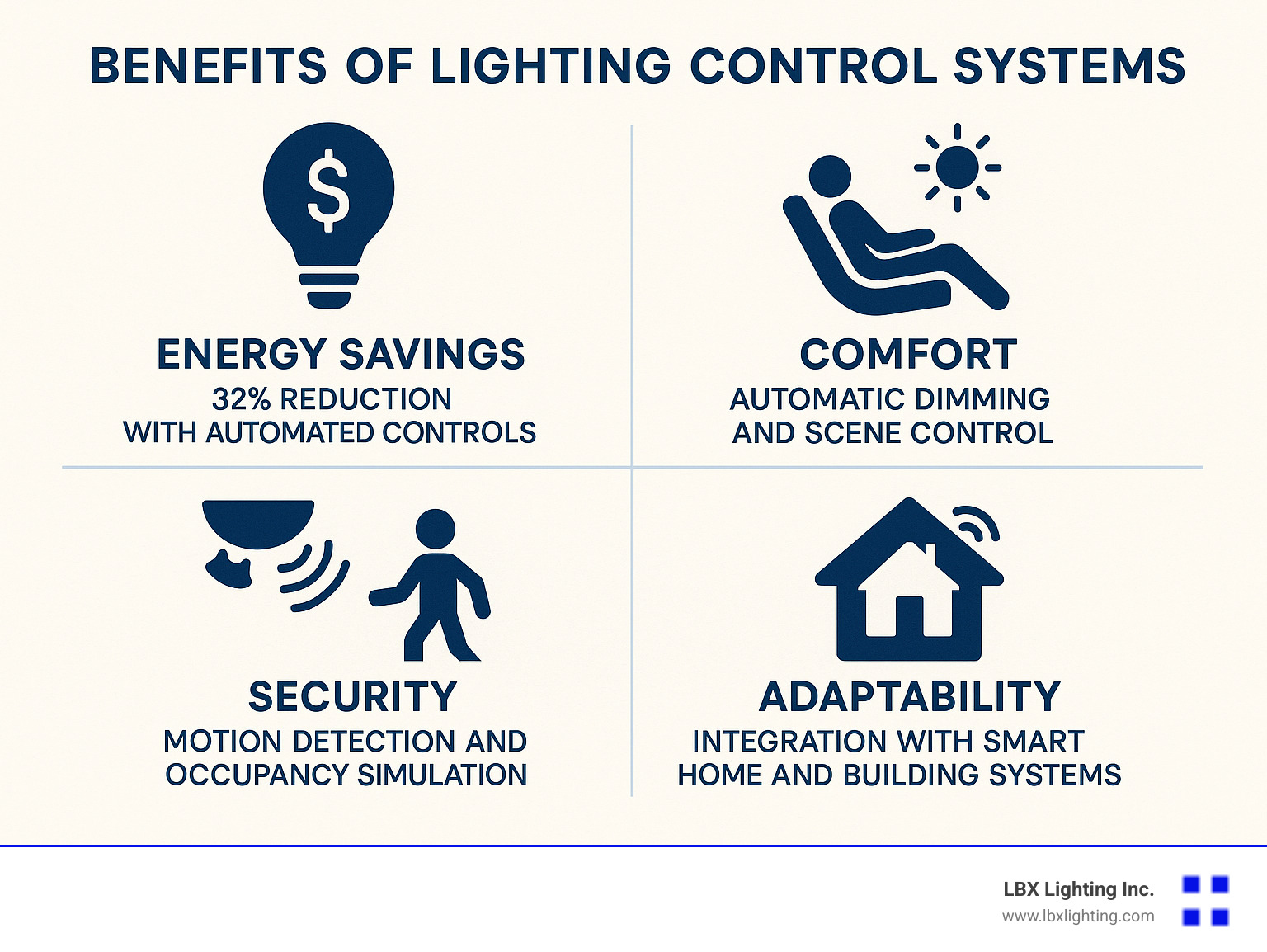
- Energy Savings: Up to 32% reduction in lighting energy consumption
- Improved Comfort: Automatic dimming and scene control for optimal lighting
- Improved Security: Motion detection and occupancy simulation features
- Cost Reduction: Lower electricity bills and extended bulb life
- Smart Integration: Works with building automation and home systems
Modern light control systems incorporate sensors, dimmers, timers, and smart networking to deliver the right amount of light exactly when and where it’s needed. These systems can detect when rooms are empty, adjust brightness based on available daylight, and even simulate occupancy for security purposes.
The impact is significant: lighting applications represent 19% of the world’s energy use and 6% of all greenhouse emissions. By implementing intelligent controls, buildings can achieve substantial energy savings while creating more comfortable and productive environments for occupants.
From simple occupancy sensors to sophisticated networked systems with smartphone control, today’s light control technology offers solutions for every space and budget. Whether you’re designing a single room or managing an entire building, understanding your options is key to making the right choice.
I’m Michael Eftekhar, and for over 30 years at LBX Lighting, I’ve helped Houston-area clients implement light control systems that deliver both energy savings and improved functionality. My experience with commercial and residential lighting projects has shown me how the right control strategy can transform any space.
The Core Benefits of Modern Lighting Control
This section explores the primary advantages of implementing a lighting control system, from significant energy reductions to enhancing the daily experience and security of a space.
Opening up Major Energy Savings and Sustainability
When I talk to clients about light control systems, energy efficiency is usually what gets their attention first – and it should! Here’s a number that might surprise you: lighting accounts for 19% of global energy use. That’s an enormous opportunity for savings sitting right above our heads.
The magic happens through precision and automation. Instead of lights blazing at full power whether you need them or not, smart controls give you exactly the right amount of light at exactly the right time.
Dimming controls are probably the simplest way to start saving energy. Think about it – do you really need 100% brightness when 70% works perfectly fine? Every time you dim those lights, you’re directly cutting energy use and extending the life of your bulbs. It’s like getting a discount on your electric bill while making your lighting last longer.
Occupancy sensing takes this a step further by thinking for you. Picture a conference room where lights automatically turn on when someone walks in, then gently fade out after the meeting ends. No more lights burning in empty spaces all night because someone forgot to flip a switch. This is especially powerful in spaces like restrooms, storage areas, or offices that aren’t used constantly.
Then there’s daylight harvesting – one of my favorite features. Why pay for electric light when the sun is doing the work for free? These systems use sensors to monitor natural light coming through windows and automatically dim or turn off electric lights accordingly. It’s like having a smart assistant constantly optimizing your lighting throughout the day.
The results speak for themselves: studies show you can achieve up to 32% energy savings with automatic lighting controls compared to conventional systems. That translates to real cost reduction on your monthly bills and a significant carbon footprint reduction for your building.
For deeper insights into maximizing efficiency, check out our Energy Efficient Ceiling Lights resources. You can also explore the scientific research on lighting control savings to see the detailed data behind these impressive numbers.
Enhancing Lifestyle, Security, and Ambiance
Beyond the impressive energy savings, light control systems truly transform how you experience your space. They turn lighting from a basic utility into an integral part of your comfort, security, and daily life.
Let’s start with pure convenience. Imagine creating a “movie night” scene with a single tap on your phone – lights dim to the perfect level, accent lighting creates ambiance, and everything happens automatically. This ability to create and recall specific lighting scenes is a real game-changer for both homes and businesses. Whether you want cozy evening lighting, an energizing work environment, or dramatic retail displays, these systems deliver with the push of a button.
Remote control via apps means you’re never stuck wondering if you left the lights on. Adjust your lighting from anywhere, whether you’re upstairs in bed or halfway across the country on vacation.
The security features of modern lighting controls are particularly impressive. Occupancy simulation makes your home or business appear occupied even when you’re away – lights turn on and off in different rooms at realistic times, creating the impression someone’s home. It’s like having a security guard that never sleeps.
When integrated with alarm systems, your lights become part of your security strategy. In case of a breach, exterior lights can flash as a warning while interior lights snap on to illuminate everything clearly. This integration with security systems creates multiple layers of protection.
But here’s where things get really exciting – the ability to create perfect mood lighting. Modern systems offer color temperature control, letting you adjust the warmth or coolness of white light. Want a cozy, warm glow for a romantic dinner? Done. Need crisp, cool light for detailed work? Easy.
Some advanced systems even offer full color tuning, opening up endless possibilities for themed events, seasonal decorations, or just expressing your personal style. I’ve seen restaurants use this to create completely different atmospheres for lunch versus dinner service.
The bottom line is that light control systems don’t just save energy – they improve every aspect of how you use and enjoy your space. For homeowners ready to experience these benefits firsthand, explore our Residential Lighting Solutions to see how we can transform your living environment.
A Buyer’s Guide to Light Control Systems Technology
Choosing the right light control systems technology can feel overwhelming at first, but it doesn’t have to be. Think of it like buying a car – you wouldn’t pick a compact for hauling furniture or a pickup truck for city commuting. The key is understanding what each technology does best and matching it to your specific needs.
Whether you’re planning a cozy home upgrade or managing a sprawling commercial facility, the right system will depend on factors like your space size, budget, installation constraints, and long-term goals. Let’s break down the essential strategies and system types so you can make an informed decision.
Essential Control Strategies to Know
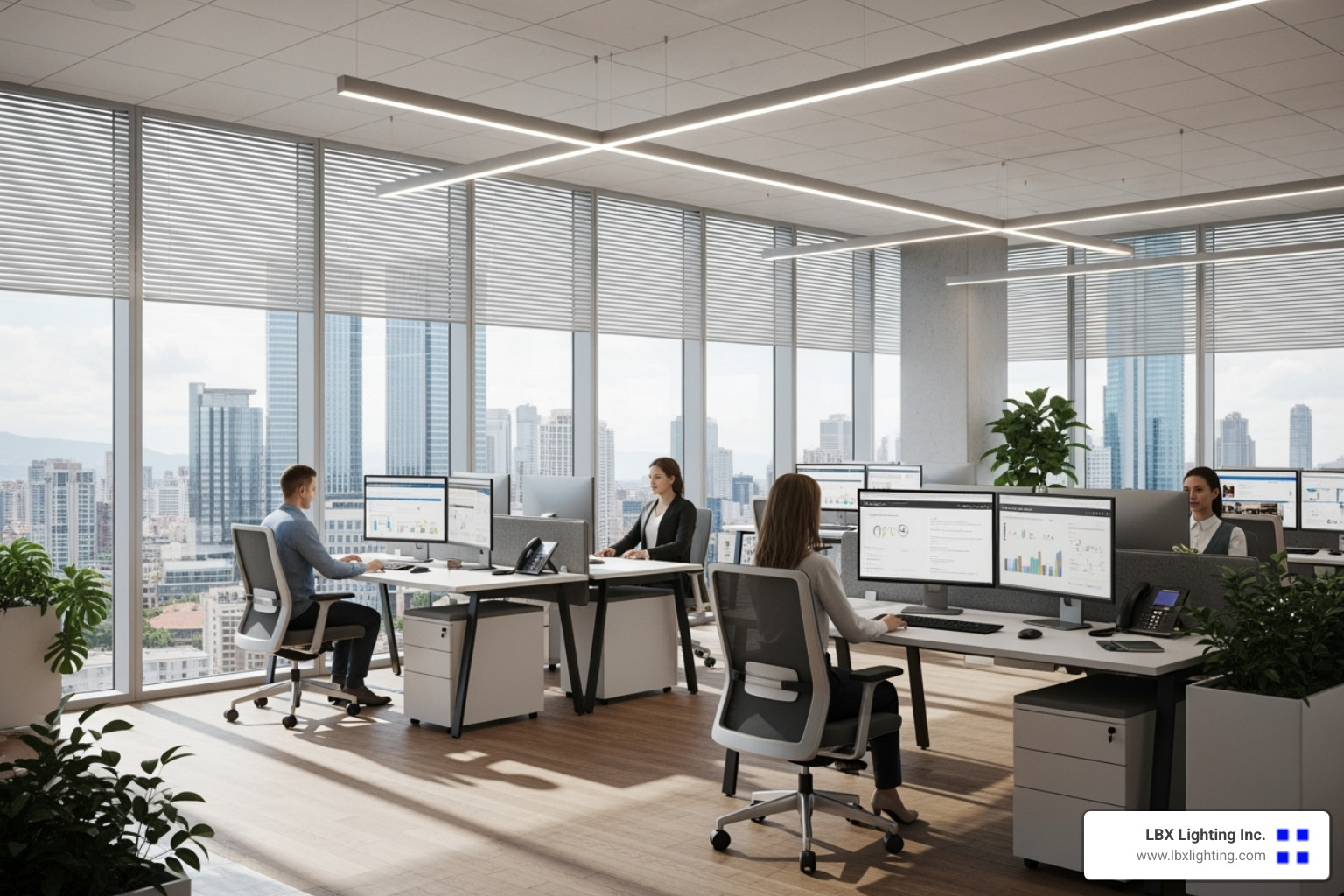
Every effective light control system relies on core strategies that work together like a well-orchestrated team. Understanding these building blocks will help you appreciate what’s possible and identify what matters most for your space.
Dimming controls form the foundation of most systems. While traditional rotary dimmers might bring back memories of that old dining room switch, today’s digital dimming technology offers smooth, flicker-free control with incredible precision. This isn’t just about creating mood lighting – dimming directly translates to energy savings and longer bulb life.
Occupancy and vacancy sensors are the workhorses of automated lighting. An occupancy sensor acts like an eager assistant, automatically turning lights on when you enter and off when you leave. A vacancy sensor is more conservative – it requires you to manually turn lights on but still automatically shuts them off when the space is empty. These sensors use different detection methods: passive infrared sensors pick up heat changes from your body, ultrasonic sensors detect motion even around corners, and hybrid sensors combine both for foolproof performance.
Daylight harvesting represents one of the smartest energy-saving strategies available. Imagine sensors near your windows constantly monitoring natural light levels and automatically dimming electric lights as sunshine streams in. This seamless integration maintains consistent lighting while maximizing free daylight – it’s like having a lighting assistant that never takes a coffee break.
Time-based scheduling offers the reliability of clockwork precision. Your exterior lights can automatically turn on at sunset and off at sunrise, office lights can shut down after business hours, and retail displays can follow custom schedules throughout the week. Some advanced systems even adjust for seasonal changes in daylight hours.
Task tuning ensures you’re not over-lighting spaces. A warehouse aisle doesn’t need the same brightness as a jewelry display case, and a hallway doesn’t require the intensity of a surgical suite. By matching light levels to specific tasks, this strategy alone can achieve up to 36% energy savings.
These strategies often work together in layers. A conference room might use occupancy sensing for automatic on/off, daylight harvesting near windows, dimming for presentation modes, and time-based scheduling to ensure lights are off overnight. For businesses looking to implement comprehensive solutions, our Commercial Lighting Controls offer expertly designed combinations of these strategies.
Standalone vs. Networked: Which Type of Light Control System is Best?
The choice between standalone and networked light control systems often comes down to scale and ambition. Both have their place, and understanding the difference will help you invest in the right solution.
Standalone systems are the independent operators of the lighting world. Each device handles its own area without communicating with others. Think of a simple dimmer switch controlling your bedroom lights or a motion sensor in a storage closet. These systems shine in their simplicity – they’re typically plug-and-play devices that you can install without calling in the cavalry.
The beauty of standalone systems lies in their room-based control approach and simple installation. They’re perfect for single rooms or small areas where centralized management isn’t necessary. A homeowner might use standalone dimmers in bedrooms and motion sensors in closets without needing everything to talk to each other.
Networked systems, on the other hand, are like having a conductor leading an orchestra. Multiple devices communicate with each other and often with a central brain that coordinates everything. This centralized control opens up possibilities that standalone systems simply can’t match.
The scalability of networked systems is impressive. Start with one floor and easily expand to the entire building. Add new devices, create complex lighting scenes, and integrate with other building systems like HVAC and security. This IoT-readiness means your lighting system can collect valuable data about space usage, energy consumption, and maintenance needs.
TABLE: Standalone vs. Networked Light Control Systems
| Feature | Standalone Systems | Networked Systems |
|---|---|---|
| Control Scope | Single light or small group | Multiple lights, rooms, floors, or entire buildings |
| Scalability | Limited, difficult to expand | Highly scalable, easy to add devices and areas |
| Centralization | No central management | Centralized control from a single interface or server |
| Programming | Basic (e.g., on/off, dimming) | Advanced (scenes, schedules, conditional logic) |
| Integration | None | Integrates with HVAC, security, AV, etc. |
| Data & IoT | Minimal or no data | Rich data collection for energy, occupancy, maintenance |
| Cost | Lower initial cost | Higher initial cost, but better long-term ROI |
| Installation | Simpler, often DIY-friendly | More complex, typically professional installation needed |
| Ideal Use | Small residential, individual offices | Commercial, large residential, smart buildings |
The choice isn’t always obvious. A small office might start with standalone sensors in individual rooms and upgrade to a networked system as they grow. A large retail chain, however, would likely benefit from networked systems from day one for consistent brand lighting and centralized management across locations.
Wired vs. Wireless: Installation Considerations
The wired versus wireless decision often determines project feasibility, especially in existing buildings. Both approaches have evolved significantly, and modern systems in each category offer excellent performance.
Wired systems represent the traditional approach, using physical cables to carry power and control signals. The reliability of dedicated connections makes them particularly attractive for mission-critical applications. When you flip that switch, you know the signal will get through – no worrying about interference from other wireless devices or thick concrete walls.
New construction projects are where wired systems truly excel. When walls are open and electricians are already running power cables, adding control wiring is relatively straightforward and cost-effective. The result is a clean, integrated system that’s built into the building’s infrastructure.
Wireless systems have revolutionized lighting control by eliminating the need for extensive control wiring. This flexibility in device placement means you can put sensors and switches exactly where they make the most sense, not just where the wires happen to run.
The real magic of wireless technology appears when retrofitting existing buildings. Instead of opening walls and fishing wires through finished spaces, wireless devices can often be installed with minimal disruption. This dramatically reduces installation costs and project timelines, making lighting upgrades accessible for buildings that couldn’t justify the expense of rewiring.
Modern wireless light control systems use sophisticated protocols like Zigbee and Bluetooth Mesh that create self-healing networks. If one device has trouble communicating, the signal can automatically route through other devices to reach its destination. This mesh networking approach often makes wireless systems more resilient than you might expect.
The decision between wired and wireless often comes down to project circumstances. A new office building might use wired systems for ultimate reliability and future-proofing. An existing retail store looking to upgrade its lighting would likely choose wireless for the installation savings and flexibility.
At LBX Lighting, we’ve implemented both approaches successfully across Houston and beyond. Our Innovative Lighting Solutions include both wired and wireless technologies, ensuring we can find the perfect fit for your specific project constraints and goals.
Key Components and System Integration
A light control system is more than just a smart bulb; it’s an ecosystem of components working together. Here’s what you need to know about the parts and how they connect to create a seamless lighting experience.
The Building Blocks of a Control System
Think of a light control system like a well-orchestrated team where every player knows their role. At the heart of it all is the controller – this is truly the brain of your operation. Whether it’s a simple microprocessor tucked inside a wall switch or a powerful server managing an entire office building, the controller receives information from sensors and user commands, then tells your lights exactly what to do.
The user interfaces are how you actually talk to your system. The basic light switch has been around since the late 1800s, but today’s options are far more exciting! Wall switches and dimmers handle your basic on/off and brightness needs, while keypads let you create and recall different lighting scenes with the press of a button. Mobile apps put control right in your pocket, and voice control through Alexa or Google Assistant means you can adjust lights without lifting a finger.
Your system’s sensors act like vigilant helpers, constantly monitoring what’s happening in your space. Motion sensors detect when someone enters or leaves a room, while daylight sensors measure how much natural light is streaming through your windows. These smart devices ensure your lights respond automatically to changing conditions throughout the day.
The actual luminaires and drivers are where the magic happens visually. Your light fixtures need to be “controllable” to work with these systems, and LED lighting is particularly well-suited for this job. The driver translates control signals into the right electrical output, ensuring smooth dimming and color changes.
Finally, system software ties everything together. This is what lets you set up schedules, create lighting scenes, and monitor energy usage. Modern software is surprisingly user-friendly, often accessible through web browsers or smartphone apps that make managing your entire light control system feel effortless.
For more details on how these components work with modern LED technology, check out our insights on LED Lighting Control Systems.
Integrating Your Light Control System with a Smart Building or Home
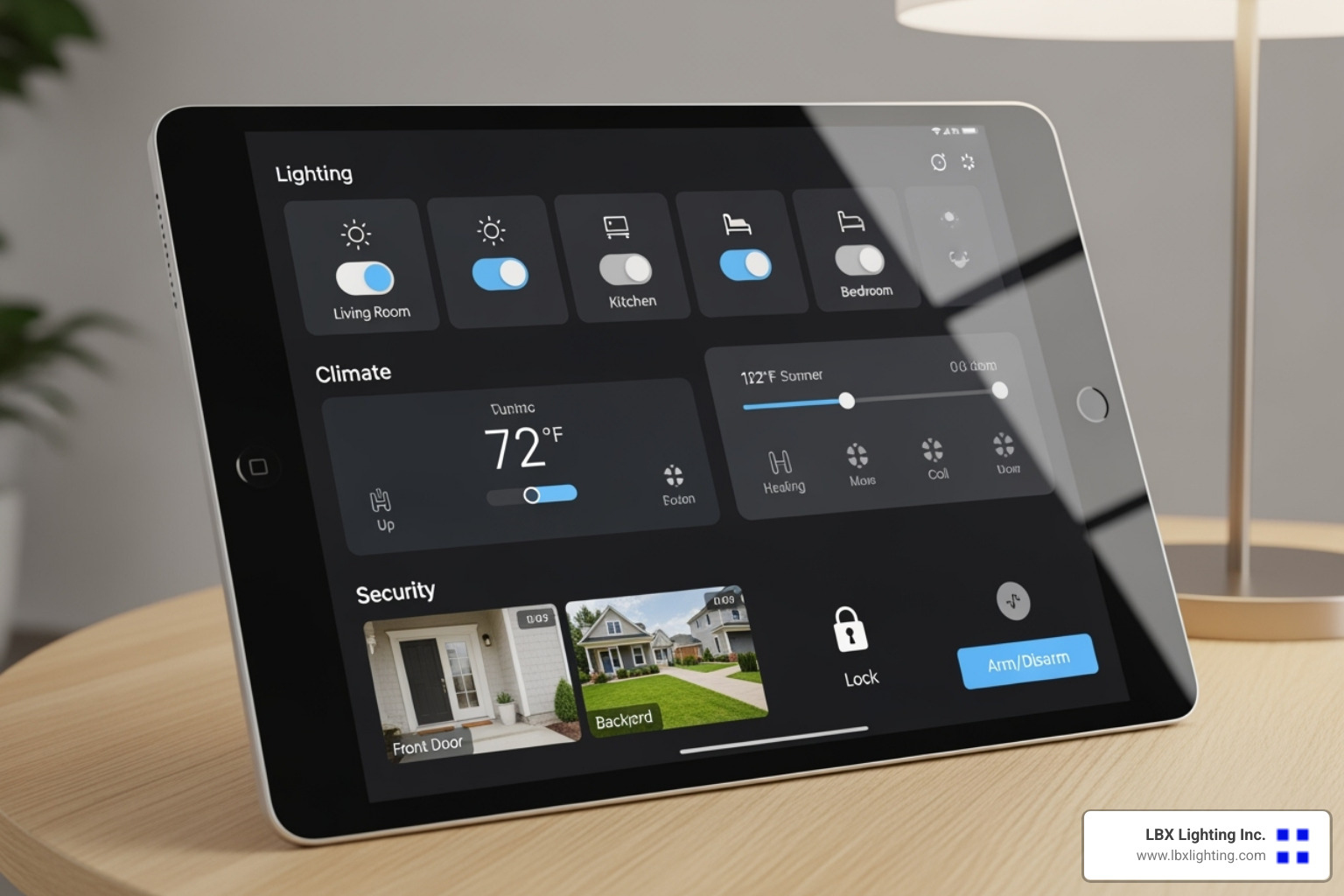
The real excitement begins when your light control system starts talking to other smart systems in your building or home. It’s like watching individual musicians become a symphony orchestra – suddenly everything works in perfect harmony.
Building Automation Systems (BAS) create powerful partnerships between your lighting and HVAC systems. Picture this: when sensors detect that the conference room is empty, your lights automatically turn off while the air conditioning shifts to an energy-saving mode. This teamwork delivers energy savings that neither system could achieve alone.
Security system integration adds another layer of both safety and convenience. If your security system detects an intrusion, your light control system can instantly flood exterior areas with light or create flashing patterns to deter intruders. When you arrive home and disarm your security system, your lights can automatically welcome you with a warm, inviting scene.
For homeowners, integration with popular smart home platforms like Amazon Alexa, Google Assistant, and Apple HomeKit transforms daily routines. Simply saying “Alexa, movie time” can dim the living room lights, close the shades, and set the perfect ambiance for your evening entertainment. Voice control eliminates the need to fumble for switches or apps when your hands are full.
This seamless integration transforms a collection of smart devices into a truly intelligent environment that anticipates your needs. Whether you’re managing a single room or an entire commercial facility, the result is a space that feels more responsive, efficient, and genuinely helpful in your daily life.
The Future is Bright: Emerging Trends in Lighting Control
The world of light control systems is moving fast, and frankly, it’s pretty exciting! We’re witnessing a shift from simple automated switches to truly intelligent environments that understand and respond to human needs. These aren’t just futuristic concepts anymore – they’re becoming reality in homes and businesses across Houston and beyond.
Human-Centric Lighting and Well-being
Here’s something fascinating: light doesn’t just help us see – it actually changes how we feel, think, and sleep. This revelation is driving one of the most important trends in light control systems today: Human-Centric Lighting (HCL).
Think about how you feel on a bright, sunny morning versus a dim, cloudy afternoon. That’s your body responding to different types of light. Our internal clocks, called circadian rhythms, are hardwired to react to light changes throughout the day. Bright, cool light in the morning wakes us up and sharpens our focus. Warm, dim light in the evening tells our bodies it’s time to wind down.
Modern light control systems are getting smart about this. Tunable white technology allows the same light fixture to shift from cool, energizing light in the morning to warm, relaxing light in the evening – automatically! Imagine walking into your office at 8 AM and being greeted by crisp, bright light that helps you feel alert. By 5 PM, that same system has gradually shifted to a warmer tone that eases your transition toward evening.
This isn’t just about comfort – it’s about health. Circadian rhythm support through proper lighting can improve sleep quality, reduce fatigue, and even boost cognitive function. Hospitals are using this technology to help patients heal faster. Schools are finding that students stay more focused when lighting matches their natural rhythms.
The beauty of adjusting light for productivity goes beyond the daily cycle too. Need to concentrate on detailed work? Your system can provide bright, focused light. Time for a brainstorming session? Softer, warmer light can encourage creativity and collaboration. It’s like having a lighting designer who knows exactly what you need, when you need it.
The goal isn’t just to light up a space anymore – it’s to create environments that actively support human well-being. You can explore more research on circadian lighting to see just how profound these effects can be.
The Rise of IoT, AI, and Data Analytics
Now here’s where things get really interesting. We’re seeing light control systems become the backbone of truly smart buildings and homes. The Internet of Things (IoT) is turning every light fixture into a connected device that can communicate, learn, and adapt.
Power over Ethernet (PoE) is becoming a game-changer in commercial settings. Instead of separate power and data cables, PoE delivers both through a single Ethernet cable. This means your lighting system becomes part of your building’s network infrastructure – and that opens up incredible possibilities.
Imagine a light control system powered by Artificial Intelligence (AI) that actually learns from how you use your space. Instead of just following preset schedules, these systems observe patterns. They notice that the conference room is always used for video calls on Tuesday mornings, so they automatically adjust the lighting to reduce screen glare before anyone even arrives. They learn that you prefer dimmer lights when working late and brighter lights during morning tasks.
But here’s what’s really exciting: these connected systems are collecting valuable space utilization data. Occupancy sensors aren’t just turning lights on and off – they’re providing insights into how spaces are actually being used. Which areas of your office are underused? When are peak usage times? This information helps with everything from space planning to cleaning schedules.
Predictive maintenance alerts are another brilliant benefit. Your lighting system can monitor the health of individual fixtures and drivers. When a component starts showing signs of wear, the system sends an alert before it fails completely. No more sudden burnouts or unexpected maintenance emergencies – just proactive care that keeps everything running smoothly.
This fusion of lighting with advanced technology is creating environments that truly understand and adapt to their occupants. For homeowners ready to accept this intelligent future, our Smart Home Lighting solutions bring this cutting-edge technology right to your living space.
The future of light control systems isn’t just about better lighting – it’s about creating spaces that actively support the people who use them. And honestly? That future is already here.
Conclusion: Making the Right Choice for Your Space
We’ve taken quite a journey together through light control systems, haven’t we? From finding how these intelligent networks can slash energy bills by up to 32% to exploring the exciting future of AI-powered lighting that learns your habits – it’s clear that smart lighting isn’t just a luxury anymore, it’s becoming essential.
The beauty of modern light control systems lies in their versatility. Whether you’re looking to add a simple occupancy sensor to your home office or design a comprehensive networked system for a multi-story commercial building, there’s a solution that fits. The key is understanding your space and matching the technology to your actual needs, not just the coolest features.
Remember those core benefits we discussed? Energy savings that reduce both costs and environmental impact, improved comfort through automated dimming and scene control, improved security with occupancy simulation and alarm integration, and smart adaptability that grows with your needs. These aren’t just nice-to-haves – they’re changing how we live and work in our spaces.
The importance of expert consultation cannot be overstated. With so many options – standalone versus networked, wired versus wireless, basic controls versus human-centric lighting – having a knowledgeable partner makes all the difference. You wouldn’t steer a complex city without a good map, and you shouldn’t steer lighting technology without expert guidance.
That’s where we come in. For projects in Houston and beyond, the team at LBX Lighting Inc. provides expert guidance to design the perfect lighting solution custom to your specific needs and budget. We’ve spent over 30 years helping clients find how the right light control systems can transform their spaces, and we’d love to help you too.
Our approach is simple: we listen to your needs, assess your space, and recommend solutions that deliver real value. Whether you’re a homeowner wanting to add convenience and security, or a business owner looking to cut energy costs while improving your environment, we have the expertise to make it happen.
Ready to step into the future of intelligent lighting? Explore our comprehensive lighting control systems and find how we can bring these benefits to your space. Let’s create something bright together!